
Picture this: you've just completed your M.Pharm from Manipal or NIPER, and you're scrolling through job listings at midnight. Clinical Research Associate positions want 2 years of experience. Data Management roles ask for EDC expertise you've never touched. Regulatory Affairs postings disappeared into the void after you applied. You're starting to wonder if the entire pharma industry has collectively decided to ignore freshers.
But here's what most of your batchmates don't know: while everyone fights for the same 50 traditional CRA positions, a parallel universe of clinical trials is expanding rapidly in India. Trials where patients participate from their living rooms in Tier-2 cities. Where data streams in from smartwatches and mobile apps. Where coordinators manage everything from laptops in Bengaluru while patients in Nagpur take their medications at home. This is Decentralised Clinical Trials, and it's creating job roles that didn't exist three years ago.
The best part? Most graduates have never heard of DCT, which means the competition for these roles is a fraction of what you face in traditional clinical research. If you position yourself right in the next 90 days, you could be among the first wave of freshers building careers in what industry insiders are calling the future of drug development.
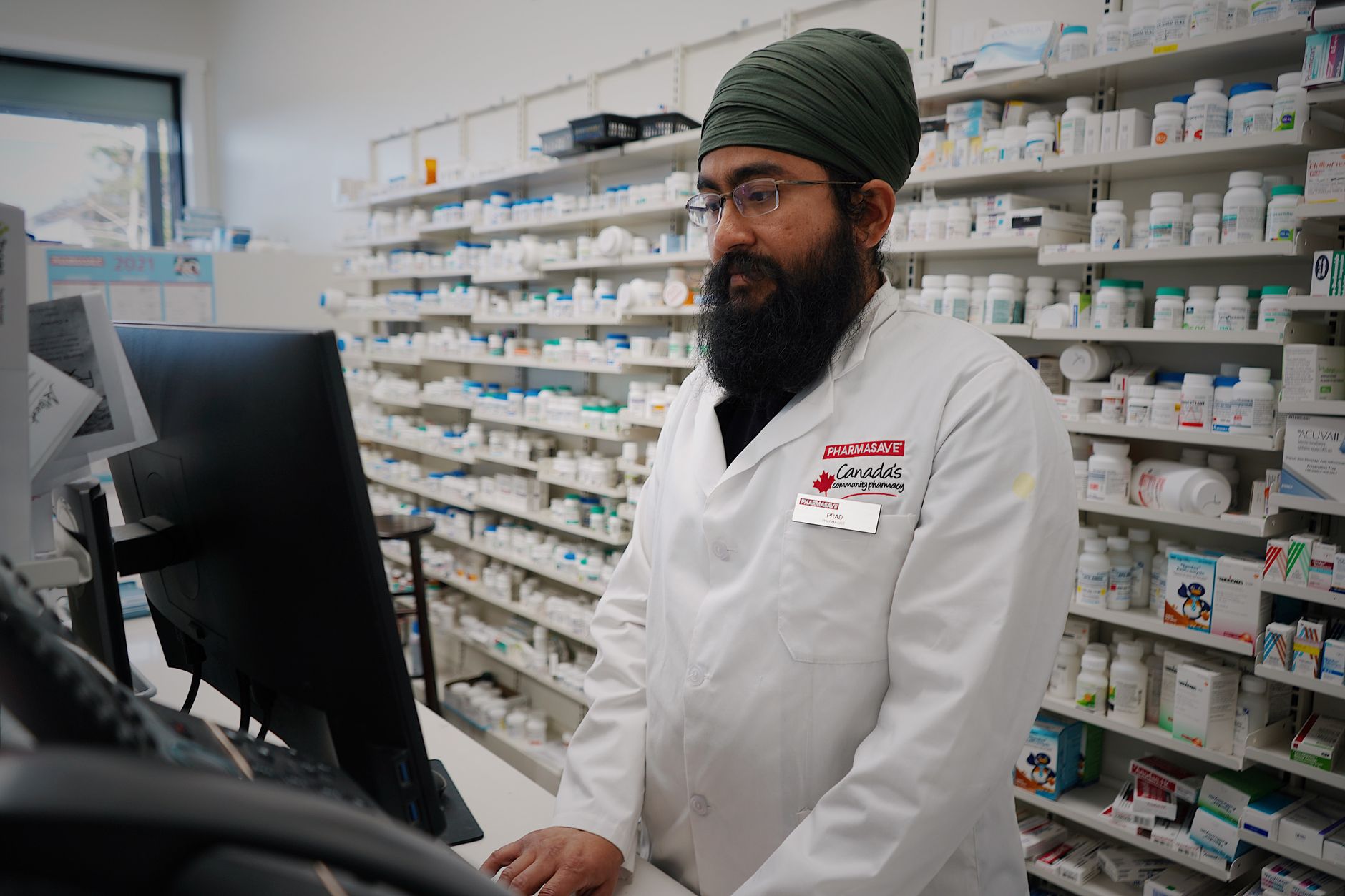 Pharmacist wearing a turban working at a computer in a pharmacy store with shelves filled with medicine. - Photo by World Sikh Organization of Canada on Pexels
What Are Decentralised Clinical Trials?
Traditional clinical trials work like this: a patient travels to a hospital or clinic, meets the investigator, gets examined, receives medication, and returns home. Repeat this every few weeks for months or years. It's the model we've used since the 1940s, and it works, but it's also expensive, slow, and excludes millions of patients who can't easily travel to trial sites.
Decentralised Clinical Trials flip this model. Instead of bringing patients to the trial, DCT brings the trial to patients. A participant in Coimbatore might give consent through a video call, receive study medication by courier, track their vitals using a wearable device that sends data directly to the sponsor, and have blood samples collected by a nurse who visits their home. They might never set foot in a hospital throughout the entire study.
The technology stack that makes this possible includes several components working together. Telemedicine platforms enable virtual visits between patients and investigators. Electronic consent systems let participants review and sign documents on their phones. Wearable devices and smartphone apps collect continuous health data. Direct-to-patient logistics handle medication delivery. Electronic data capture systems aggregate everything in real-time for monitoring.
Most trials today aren't fully decentralised but rather hybrid models. A patient might come to a site for their initial screening and a few key visits but complete most follow-ups remotely. This hybrid approach is actually where most of the job growth is happening because it's practical for a wider range of therapeutic areas and patient populations.
COVID-19 didn't invent DCT, but it compressed five years of adoption into eighteen months. When sites shut down globally in 2020, sponsors scrambled to implement remote elements to keep trials running. What they discovered was that patients loved the convenience, data quality often improved with continuous monitoring, and trials could recruit faster by reaching patients in locations without nearby sites. The pandemic ended, but the shift to decentralised models accelerated.
Why DCT is Booming in India: Market Landscape 2025
India's clinical trial market is projected to exceed $3.5 billion by 2027, and DCT is growing faster than any other segment within it. The reasons are uniquely Indian.
Consider the geography challenge. India has over 1.4 billion people spread across 28 states with vastly different healthcare infrastructure. A traditional trial site in Mumbai or Chennai can only recruit patients within reasonable travel distance. But a DCT-enabled study can reach patients in Indore, Jaipur, Lucknow, or Kochi without requiring them to travel to metro cities. This dramatically expands the recruitment pool and helps sponsors complete trials faster.
The regulatory environment is becoming friendlier. CDSCO released guidance on telemedicine in clinical trials, and the 2023 amendments to clinical trial rules explicitly accommodate remote monitoring and electronic consent. India's Digital Personal Data Protection Act 2023 provides a framework for handling patient data in virtual settings. Regulators aren't just permitting DCT; they're actively encouraging it.
The cost advantage is significant. Running a decentralised trial in India costs 40-60% less than equivalent trials in the US or Western Europe. When you add DCT efficiencies, the savings compound further. Global sponsors are increasingly choosing India for DCT-enabled studies, which means more jobs.
Major players are investing heavily. IQVIA has built dedicated DCT capabilities in Bengaluru and Hyderabad. Parexel's India operations include a growing remote monitoring team. Indian CROs like Veeda and Lambda are developing their own DCT platforms to compete for this business. Technology vendors like Medable and Science 37 have established India operations specifically to support the growing demand.
Career Opportunities in DCT for Pharma Freshers
Here's what makes DCT particularly interesting for freshers: it's creating entirely new job categories that don't have the same experience requirements as traditional roles.
When a CRO posts a Clinical Research Associate position, they want someone who has monitored sites before. The skill set is well-defined, and experienced candidates are available. But when the same CRO needs to staff a DCT program, they're building something new. They need people who understand both clinical research fundamentals and digital health technologies. They need coordinators who can support patients through apps and video calls rather than in-person visits. They need data specialists who can handle continuous data streams from wearables rather than periodic case report forms.
The talent pool with this combined skill set is small because the field is new. This creates an opening for freshers who deliberately build both competencies. You're not competing against people with 5 years of DCT experience because almost nobody has 5 years of DCT experience. You're competing on your ability to learn quickly and adapt to technology-enabled workflows.
Remote work is another advantage. Many DCT roles can be performed from anywhere with reliable internet. A company in Mumbai might hire a DCT coordinator based in Bhopal because the role doesn't require physical presence at a site. This expands your job market beyond the traditional pharma hubs and can mean lower cost of living while earning competitive salaries.
The cross-functional nature of DCT work also creates diverse entry points. You might come in through a patient engagement angle, a data management angle, a technology support angle, or a regulatory compliance angle. Different backgrounds and interests can find their niche.
Top DCT Job Roles for Freshers in India
Let me walk you through the specific roles where freshers are getting hired, with honest assessments of what each involves.
Remote Clinical Trial Coordinator is probably the most common entry point. Your job is to support patients participating in decentralised trials. A typical day might involve calling three patients to remind them about upcoming virtual visits, troubleshooting why one participant's app isn't syncing their blood pressure data, coordinating with a home health nurse to schedule a blood draw in Pune, and documenting all these interactions in the trial management system. You need strong communication skills, patience with technology issues, and the ability to explain complex procedures in simple language. Fresher-friendly because companies can train you on their specific platforms.
DCT Site Support Specialist works at the intersection of sites and technology. When a trial site in Hyderabad is implementing remote monitoring for the first time, you help them understand the technology, train their staff, and troubleshoot issues. You might spend your morning on a video call walking a coordinator through the eConsent platform and your afternoon updating training materials based on feedback. This role suits freshers who enjoy teaching others and have patience for repetitive questions.
Data Management Associate (DCT-focused) handles the unique data challenges of decentralised trials. Traditional trials generate data at scheduled visits. DCT trials generate continuous data from wearables, apps, and remote monitoring devices. You learn to work with larger data volumes, identify when a device is malfunctioning versus when a patient's health is genuinely changing, and ensure data integrity across multiple collection methods. Strong attention to detail and comfort with data systems are essential. Some EDC knowledge helps but isn't always required for entry-level positions.
Patient Recruitment Coordinator focuses on finding and enrolling participants for DCT studies. This involves managing digital advertising campaigns, screening potential participants through online questionnaires, conducting initial eligibility calls, and coordinating the consent process. You might work with marketing teams to optimize recruitment messaging or analyze which channels are producing qualified patients. This role suits freshers with good communication skills and an interest in patient outreach.
Clinical Technology Support Specialist is more technically oriented. When patients have trouble with their study devices or apps, you're the first line of support. You might walk someone through pairing a Bluetooth blood pressure cuff with their phone, investigate why a participant's data isn't appearing in the system, or escalate complex issues to the vendor. Basic technical aptitude and excellent phone manner are key. You don't need to be a software developer, but you should be comfortable learning new apps quickly.
Essential Skills for DCT Careers
Let me separate the dealbreakers from the nice-to-haves because this distinction matters for how you spend your preparation time.
Dealbreakers (you need these to get hired):
Digital literacy is non-negotiable. You should be comfortable navigating multiple software platforms simultaneously, troubleshooting basic technology issues, and learning new tools quickly. If you struggle with apps and websites in your personal life, DCT probably isn't your path.
Communication skills for remote interaction are different from in-person communication. You need to build rapport over video calls, explain technical concepts clearly on the phone, and write emails that don't get misunderstood. Practice this deliberately.
Basic clinical research knowledge is still required. You need to understand GCP principles, trial phases, informed consent, adverse event reporting, and regulatory basics. DCT changes how trials are conducted, not what they're trying to achieve.
Self-discipline for remote work matters more than people admit. If you need someone watching you to stay productive, remote DCT roles will be challenging. Companies are looking for people who can manage their time, meet deadlines without constant supervision, and maintain focus while working from home.
Nice-to-haves (these help but aren't required for entry-level):
Familiarity with specific platforms like Medidata Rave, Veeva, or particular telemedicine systems. Companies expect to train you on their tools.
Experience with wearable devices or health apps. Having used a fitness tracker or health monitoring app helps you understand the patient experience, but you can learn this quickly.
Knowledge of data privacy regulations like DPDP Act or GDPR. Important for some roles but typically covered in onboarding.
💡 Tip
The fastest way to demonstrate digital literacy in interviews is to describe a time you taught yourself a new software tool without formal training. Every DCT role involves learning unfamiliar platforms, so showing you can self-teach matters more than listing specific tools you already know.
Educational Background and Qualifications
B.Pharm and M.Pharm graduates are well-positioned for DCT roles because you have the clinical foundation. The pharmacology, therapeutics, and regulatory coursework you've completed provides context for understanding what trials are measuring and why. Your challenge is adding the digital health layer.
Life sciences graduates from M.Sc Biotechnology, Microbiology, or related fields can also enter DCT, particularly through data management or technology support angles. You might need slightly more effort to build clinical research fundamentals, but the path is open.
For certifications, prioritize strategically. A GCP certification from a recognized provider is valuable across all DCT roles because it demonstrates you understand the regulatory framework. ACRP or SOCRA certifications add credibility but aren't essential for entry-level positions.
DCT-specific training is still emerging. Look for courses on clinical trial technology, remote patient monitoring, or digital health fundamentals. Coursera, edX, and Udemy have relevant options. The Applied Clinical Trials website and DIA (Drug Information Association) offer webinars and short courses on decentralised trial implementation.
Don't overlook the value of general digital skills. A course on data analysis with Excel or introduction to SQL can differentiate you for data-focused DCT roles. Basic project management knowledge helps for coordinator positions.
Salary Expectations: DCT Roles in India (2025)
Let me give you realistic numbers based on current market data, not inflated figures that will disappoint you.
Entry-level DCT roles for freshers typically pay ₹3.5-5.5 lakhs per annum in 2025. This is comparable to traditional clinical research entry positions, sometimes slightly higher because of the specialized skill set. Remote Clinical Trial Coordinators at CROs like IQVIA or Parexel start around ₹3.5-4.5L. Technology support roles sometimes pay slightly higher at ₹4-5.5L because they require more technical aptitude.
At 2-3 years of experience, salaries jump to ₹6-9 lakhs for strong performers. By this point, you've likely specialized in a particular aspect of DCT operations and can handle more complex responsibilities independently.
By 5 years, you're looking at ₹10-15 lakhs for senior coordinator or specialist roles, with management track positions reaching ₹15-20L. The ceiling is higher in DCT than traditional clinical operations because the field is growing and experienced talent is scarce.
Factors that affect compensation include company type (global CROs generally pay more than Indian CROs), location (Bengaluru and Mumbai command premiums), and specific skill combinations (data management plus DCT expertise pays more than either alone).
ℹ️ Info
Remote work in DCT roles can effectively increase your compensation by 15-25% if you live in a lower cost-of-living city while earning salaries benchmarked to metro markets. A ₹4.5L salary goes much further in Indore than in Mumbai.
Top Companies Hiring for DCT Roles in India
Global CROs are the biggest employers for DCT positions. IQVIA has the largest India presence and has invested significantly in decentralised trial capabilities across their Bengaluru and Hyderabad offices. They hire freshers for coordinator and support roles regularly. Parexel's India operations include a growing DCT team, and they're known for structured training programs. ICON and PPD (now part of Thermo Fisher) have smaller but growing DCT operations in India.
Indian CROs are catching up. Veeda Clinical Research in Ahmedabad has developed DCT capabilities and offers good entry points for freshers willing to relocate. Lambda Therapeutic Research and Synchron Research have smaller DCT programs but can be easier to break into because of less competition for positions.
Pharma companies are building internal DCT capabilities. Dr. Reddy's has implemented decentralised elements in several trials and hires for coordination roles. Cipla and Sun Pharma are earlier in their DCT journeys but represent future opportunities. Biocon has shown interest in DCT for their biosimilar programs.
Technology vendors offer a different angle. Medable, Science 37, and TrialSpark are DCT-focused technology companies with India operations. They hire for patient support, implementation, and technical roles. These positions often pay well and provide deep exposure to DCT platforms.
Consulting and services firms like Accenture Life Sciences and Cognizant Life Sciences support pharma companies implementing DCT strategies. They hire freshers into analyst roles that can transition into DCT-focused work.
How to Break Into DCT as a Fresher: Step-by-Step Roadmap
This 90-day plan is designed to make you a competitive candidate for entry-level DCT positions.
Days 1-30: Build your foundation. Complete a GCP certification if you haven't already. Read the CDSCO guidelines on telemedicine in clinical trials. Understand the basics of ICH-GCP and how they apply to remote trial conduct. Follow Applied Clinical Trials, Clinical Leader, and Fierce Biotech for DCT news. Join the Clinical Trials Transformation Initiative (CTTI) mailing list for their DCT resources.
Days 31-60: Develop digital health literacy. Download and explore telemedicine apps like Practo and DocsApp to understand patient experience. If you have a fitness tracker or smartwatch, pay attention to how it collects and displays health data. Take a free course on digital health fundamentals. Learn basic data concepts: what is structured vs unstructured data, what is an API, how do mobile apps communicate with servers. You don't need to become technical, but you need to speak the language.
Days 61-90: Position yourself and apply. Rebuild your CV with DCT-relevant keywords and framing. Update your LinkedIn headline to include "Clinical Research | DCT | Digital Health" or similar. Connect with DCT professionals at target companies and engage genuinely with their content. Start applying to positions, prioritizing CROs with established DCT programs. Prepare for interviews by practicing explanations of how you'd handle common DCT scenarios.
Throughout this period, document your learning. If you complete a course on remote patient monitoring, write a brief LinkedIn post about what you learned. If you read an interesting article about DCT challenges in India, share your perspective. This creates evidence of your genuine interest in the field.
Crafting Your DCT-Ready Resume and Profile
Your CV needs to signal that you understand what DCT involves and have relevant capabilities, even without direct experience.
Keywords matter for getting past applicant tracking systems. Include terms like: decentralised clinical trials, remote patient monitoring, telemedicine, eConsent, electronic data capture, wearable devices, patient engagement, virtual visits, hybrid trials, GCP, ICH guidelines.
Structure your skills section to highlight both clinical and technical competencies. Instead of a generic "Computer Skills: MS Office" line, try: "Digital Health Platforms: Familiar with telemedicine interfaces, health monitoring apps, and electronic data capture concepts. Quick learner with new software systems."
Your education section should emphasize relevant coursework. If you studied clinical pharmacology, biostatistics, or research methodology, mention these specifically. If you completed any projects involving data collection, patient interaction, or technology, describe them with DCT framing.
For freshers, academic projects can demonstrate relevant skills. Did you conduct a survey for your thesis? That's patient recruitment and data collection experience. Did you use any software for data analysis? That's EDC-adjacent experience. Did you present findings to your department? That's stakeholder communication.
⚠️ Note
Don't claim expertise you don't have. Saying you're "proficient in Medidata Rave" when you've never used it will backfire in interviews. Instead, say "familiar with EDC concepts and eager to develop platform-specific skills." Honesty about your current level combined with demonstrated learning ability is more attractive than inflated claims.
 A diverse team of professionals collaborating around a laptop in a modern office setting. - Photo by Bhandari Law and Partners on Pexels
Acing DCT Job Interviews: What to Expect
DCT interviews typically combine clinical research fundamentals, technology comfort assessment, and behavioral questions about remote work.
Expect questions like:
"Walk me through how informed consent works in a decentralised trial." They want to know you understand that eConsent must still meet regulatory requirements: patients need time to review, ask questions, and voluntarily agree. The technology is a tool, not a shortcut.
"A patient calls saying their study device isn't working. How would you handle this?" They're assessing your troubleshooting approach and patient communication skills. A good answer walks through gathering information, basic troubleshooting steps, knowing when to escalate, and documenting the interaction.
"How would you ensure data integrity when patients are collecting their own measurements at home?" This tests your understanding of DCT-specific challenges. Discuss device validation, training patients on proper use, identifying outliers that might indicate errors, and the importance of clear documentation.
"Tell me about a time you had to learn a new technology quickly." They want evidence you can adapt to unfamiliar platforms, which is constant in DCT work.
"How do you stay productive when working remotely?" Be honest about your strategies. If you haven't worked remotely before, describe how you managed independent study during college or completed self-directed projects.
Prepare questions to ask them: "What DCT platforms does your team currently use?" "What's the biggest challenge your team faces in decentralised trial operations?" "What does the training program look like for this role?" These signal genuine interest and help you evaluate the opportunity.
Challenges and Considerations in DCT Careers
I want to be honest about the difficulties you'll face so you can prepare rather than be surprised.
Technology barriers are real in India. Not every patient has a smartphone, reliable internet, or comfort with apps. You'll encounter situations where the technology that makes DCT possible simply doesn't work for certain participants. This can be frustrating when you believe in the model but can't make it work for everyone.
Regulatory uncertainty means rules are still evolving. What's acceptable today might change next year. You need to stay current with CDSCO updates and be comfortable with ambiguity. This is also an opportunity: professionals who understand emerging regulations are valuable.
Remote work isolation affects some people more than others. If you thrive on office social interaction, fully remote DCT roles might feel lonely. Consider hybrid positions or ensure you have strong social connections outside work.
The need for continuous learning is relentless. DCT technology evolves constantly. The platform you master this year might be replaced next year. If you prefer stable, unchanging work, this field might not suit you. If you enjoy learning new things, it's ideal.
Data security concerns are heightened when patient information travels through apps, wearables, and cloud systems. You'll need to understand and follow strict protocols. A single data breach can end careers and harm patients.
Future Outlook: DCT Career Growth in India
The trajectory is strongly positive. Industry analysts project DCT-enabled trials to represent 30-40% of all clinical trials globally by 2028, up from roughly 15% today. India's share of this market is growing faster than the global average because of our cost advantages and improving digital infrastructure.
Emerging technologies will create new roles. AI-powered patient monitoring systems will need people who can interpret their outputs and intervene appropriately. Blockchain applications for trial data integrity will require professionals who understand both the technology and regulatory requirements. IoT devices for continuous health monitoring will expand the types of data available and the skills needed to manage it.
Career advancement paths are becoming clearer. A strong performer might progress from DCT Coordinator to Senior Coordinator to DCT Project Manager to DCT Strategy Lead over 8-10 years. The people who enter now, when the field is still forming, will have advantages as it matures. They'll be the experienced professionals that future freshers compete against.
Success Stories: Freshers Who Made It in DCT
Priya completed her B.Pharm from a college in Pune that wasn't among the top-ranked institutions. She couldn't get interviews for traditional CRA positions despite strong academics. She pivoted to DCT after reading about it online, completed a GCP certification and two Coursera courses on digital health, and rewrote her CV to emphasize a college project where she'd used a mobile app for patient survey data collection. Within four months, she landed a Remote Patient Support Coordinator role at a DCT technology vendor. Her starting salary was ₹4.2 lakhs, and she's since been promoted twice in two years.
Rahul had an M.Pharm in Pharmacology from a university in Karnataka. He was interested in data management but found the field crowded with experienced candidates. He noticed that DCT roles often mentioned data handling from wearables and apps, which seemed like a niche he could fill. He taught himself basic SQL, learned about common wearable device data formats, and positioned himself as someone who could bridge clinical data management and digital health data. A CRO hired him for a DCT Data Associate role after seeing his LinkedIn posts about remote monitoring data challenges. He now leads a small team handling wearable data integration for multiple trials.
The common thread: both identified DCT as an underserved niche, deliberately built relevant skills, and positioned themselves specifically for this emerging field rather than competing in crowded traditional categories.
Related reading on ClinPath:
- AI in Clinical Trials India 2025: Complete Career Guide for Pharma Freshers
- ASCO 2026 Highlights: CAR-T, Obesity Drugs & Oncology Career Paths for Indian Pharma Freshers
- Clinical Data Management Career in India 2025: Complete Guide for Freshers
Resources to Kickstart Your DCT Career Journey
Online courses worth your time:
CTTI's DCT resources are free and comprehensive. The Clinical Trials Transformation Initiative has published extensive guidance on decentralised trial implementation.
Coursera's "Digital Health" specialization from Imperial College London provides good foundational knowledge.
ACRP offers DCT-specific webinars and resources for members.
Publications to follow:
Applied Clinical Trials covers DCT developments regularly. Clinical Leader and Fierce Biotech provide industry news. LinkedIn newsletters from DCT professionals offer practical insights.
Networking opportunities:
Join LinkedIn groups focused on clinical research in India. Follow and engage with DCT professionals at target companies. DIA India chapter events sometimes cover DCT topics.
Job search strategy:
Search for keywords like "remote clinical trial," "decentralised," "DCT," "virtual trial," "patient support coordinator," and "clinical technology" on LinkedIn and Naukri. Set alerts so you see new postings immediately.
The DCT field rewards people who demonstrate genuine interest and initiative. Your competition isn't just other freshers; it's the perception that freshers can't handle technology-enabled, self-directed work. Every piece of evidence you create that contradicts this perception improves your chances.
If you're ready to start positioning yourself for DCT roles, building a CV that highlights both your clinical foundation and digital readiness is the essential first step. Build your pharma CV free on ClinPath with templates specifically designed to showcase the combination of skills that DCT employers are looking for. The freshers who land DCT roles in 2025 won't be the ones with the most impressive degrees; they'll be the ones who saw where the industry was heading and prepared accordingly.