
Every Clinical Data Management job posting asks for the same thing: understanding of the "data lifecycle." Most freshers can recite the phrase without being able to explain what actually happens between a trial getting approved and a drug reaching pharmacy shelves. That gap is exactly what trips people up in interviews, and it's the first thing worth fixing before you apply anywhere.
Let's build the picture from the ground up, using a scenario that mirrors how a real molecule moves from a lab bench toward a Phase I trial.
From Lab Discovery to IND: Where CDM Enters the Picture
Imagine a researcher working on a PhD in molecular pharmacology, focused on breast cancer. Somewhere in that research, they identify a biomarker that can direct T-cells to produce tumour-specific antibodies and enhance anti-tumour immunity, while sparing healthy cells from harsh side effects. The early data is promising enough that the researcher doesn't want it to die in a lab notebook. Like every researcher, the real goal is to get the molecule into patients who need it.
The work done so far is animal research, what the industry calls a pre-clinical trial. Animal data alone is never enough to release a drug into the market. Before that can happen, the molecule has to be tested in humans. So the researcher takes the pre-clinical package to a sponsor, and if the safety-to-efficacy balance looks strong enough, the sponsor files an Investigational New Drug (IND) application with the regulatory authority. Once that's approved, the clinical trial can actually begin - and this is the exact point where Clinical Data Management, along with every other clinical research function, starts its work.
To see how these functions divide the labour, follow the same molecule forward: the IND paperwork and regulatory submissions are handled by regulatory writing; every adverse event from Phase I through post-marketing surveillance is tracked by pharmacovigilance; the study's data - from collection to database lock - is owned by Clinical Data Management; the narrative documentation of results becomes the job of medical writers, while publications and conference materials go to scientific writers; and the on-the-ground execution - site monitoring, investigators, coordinators, the Trial Master File - sits with clinical operations.
None of these functions work in isolation. A trial moves from first patient to regulatory approval only because all of them coordinate continuously. Every person touching a clinical trial, directly or indirectly, is working toward the same outcome: getting a safe, effective treatment to a patient who's waiting for it. That's worth remembering on the days the work feels like spreadsheets and query counts.
What a Clinical Trial Protocol Actually Is
Before a single patient is enrolled, the trial needs a protocol - the document that defines the trial's objectives, design, methodology, statistical approach, and organisation, while safeguarding both subject safety and data integrity. Nothing in CDM makes sense without first understanding the protocol, because every downstream decision - what data gets collected, when, and how it's checked - traces back to it.
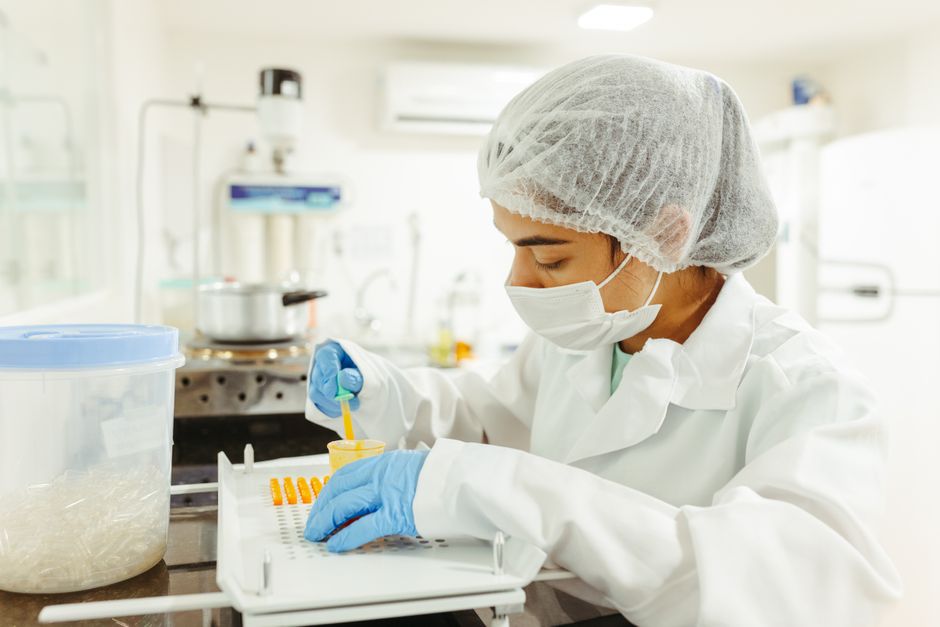 Photo by Jonathan Borba on Pexels
Once the protocol is finalised, it goes to the Institutional Review Board (IRB) at each participating site for approval. Every clinical site - referred to as a clinical institution or hospital - has its own local IRB, and the protocol must be tailored to that IRB's submission requirements. Only after IRB approval can a site begin recruiting subjects.
This is also a good moment to fix the vocabulary you'll use every day in CDM. Patients enrolled in a trial are called subjects. Hospitals running the trial are clinical sites. Doctors overseeing subjects are investigators. Nurses and support staff are site coordinators. And the person who travels between sites checking that everyone is following Good Clinical Practice is the Clinical Research Associate (CRA). You'll see these terms constantly, so it's worth having them locked in before you walk into an interview.
Here's a simple way to picture the scale of what CDM is dealing with. Think about a routine visit to a doctor for a fever: vitals get recorded, a blood test gets ordered, results come back, a prescription follows. That's already a meaningful amount of data from one visit. Now multiply that by a clinical trial enrolling 6,000-10,000 patients over roughly ten years, with structured visits, lab draws, and safety assessments repeated at every stage. That volume of data can't live in a notebook or a spreadsheet - it needs a database that's tamper-proof, standardised, and compliant with regulations like 21 CFR Part 11. Building and managing that database, based entirely on what the protocol specifies, is the core job of Clinical Data Management.
CDM's work across a trial breaks into three phases: Study Start-Up, Study Conduct, and Study Close-Out. Here's what actually happens in each one.
 Photo by RDNE Stock project on Pexels
Study Start-Up: Building the Database From the Protocol
Every protocol contains a section called the Visit Evaluation Schedule (VES), which lays out exactly what data gets collected at each patient visit. When a subject enrolls, the first data captured is screening data: demographics, medication history, prior conditions, and anything else the protocol requires before deciding whether the subject qualifies for the trial.
Once a subject clears the eligibility criteria, they begin receiving the study drug on a defined schedule. Blood draws and other assessments happen at specified intervals around dosing, to capture pharmacokinetic and pharmacodynamic data. The VES is the master document that dictates this entire timeline, and CDM uses it to design the clinical database from scratch.
The format of that database depends on how data is collected. Trials that still use paper forms (Paper CRFs) may run on older platforms like Oracle Clinical or OpenClinica. Most modern trials collect data electronically through eCRFs, built on EDC (Electronic Data Capture) platforms such as Medidata Rave, Oracle InForm, or Veeva Vault EDC.
Study Start-Up, in practical terms, covers: validating the protocol, designing the CRF, building and validating study documents, running User Acceptance Testing (UAT) on the database, getting sponsor approval, and finally taking the database live. Each of these deserves its own deep dive - and interviewers will absolutely ask about them - but the sequence itself is the part every fresher needs to have memorised.
Study Conduct: Reviewing Data as It Comes In
Once the database goes live, multiple teams start using it: clinical operations, safety, CDM, and other sponsor-side stakeholders. CDM's specific job during this phase is reviewing the data for clinical consistency - catching missing entries, spotting values that don't add up, and flagging anything sites may have skipped that the protocol requires.
Where does CDM get the rules for what to review? Back to the protocol again. The more thoroughly you understand a study's protocol, the more confidently you can review its data - reviewing stops feeling like guesswork and starts feeling systematic. This is also where terms like edit checks, queries, discrepancy management, and medical coding live, all of which are core to day-to-day CDM work during Study Conduct. Each of these is detailed enough to warrant a separate article, but the throughline is simple: Study Conduct is the phase where CDM actively defends data quality while the trial is still running.
Study Close-Out: Locking the Database
Once the trial reaches Last Patient Last Visit (LPLV), Study Close-Out begins. The data manager's job here is to confirm that every data point required by the protocol has been captured and cleaned, and that any data coming from third parties - central labs, IVRS/IWRS systems, safety databases - has been reconciled against the clinical database.
Once all stakeholders agree the data is complete and clean, the study moves to database lock: site access for data entry is disabled, and the dataset is frozen. From there, final data is handed to biostatisticians, who generate the Tables, Figures, and Listings (TFLs) that medical writers use to produce the Clinical Study Report - the document that ultimately goes to the regulatory authority for review.
Why This Sequence Matters for Your Interview Prep
If there's one thing to take from this article, it's that CDM isn't a single job description - it's three distinct phases (Start-Up, Conduct, Close-Out), each with its own deliverables, and every one of them traces back to the protocol. Interviewers test exactly this: can you explain how a patient visit at a site eventually becomes a locked, submission-ready dataset? If you can walk through that chain confidently, you're already ahead of most fresher candidates.
Related reading on ClinPath: